Detail 02 · Finishes

Meet the Finish Up Close

Before shade, before brand, before trend: the finish decides how a product meets light. Here is what each surface does, where it tends to shine, and where it asks more of you.

Why finish matters more than you think

When people say a lipstick "looks different on me", they are often noticing finish rather than colour. A pigment's hue is fixed, but the surface around it decides how much light scatters, how much reflects straight back and how much texture becomes visible. Two products with the same shade name can feel like different colours because one is velvety matte and the other is a high-shine balm.

Formulators control finish through the balance of powders, oils, waxes, film-formers and light-reflecting particles. You can read part of that story on the ingredient list: products sold in the EU and UK list ingredients by INCI name (International Nomenclature of Cosmetic Ingredients), so you will see entries like mica, silica or dimethicone regardless of the language on the box. We don't need to decode every line to make better choices, but recognising a few patterns helps.
The finish spectrum, swatch by swatch

Matte
Scatters light; flat, velvety.
Satin
Low sheen; soft edges.
Dewy
Reflective; fresh highlight.
Metallic
Strong, directional shine.
Glitter
Separate sparkling particles.

Matte formulas rely on powders and absorbent ingredients that diffuse light. They give a crisp, even look and photograph without hot spots, but they also reveal dryness and texture because nothing softens the surface. Satin and "natural" finishes sit in the middle: a gentle sheen that reads like skin, forgiving on most surfaces.

Dewy or luminous products contain more emollients or fine reflective particles. They mimic a fresh, hydrated look and tend to need more care with placement, since shine on the high points of the face reads as glow, while shine everywhere can read as oil. Metallic and foil finishes use larger, flatter reflective particles, often mica coated with mineral pigments, to produce a mirror-like effect. Glitter is different again: visible, separate particles that catch light individually. Within the EU, cosmetic ingredients are governed by Regulation (EC) No 1223/2009, which also lists which colourants are permitted and where, so glitter marketed for eyes is formulated differently from craft glitter, which should never be used on skin.

A comparison you can hold up to the mirror

Finish comparison
FinishLight behaviourShows texture?Common categoriesTypical approach
MatteDiffusesMore visibleFoundation, lipstick, eyeshadowThin layers, build slowly
Satin / naturalSoft sheenModeratelySkin tints, lipstick, blushFingers or buffing brush
Dewy / luminousReflectsLess, but shows shineSkin tints, cream blush, highlighterPress with sponge, target high points
Metallic / foilStrong reflectionCan emphasise creasesEyeshadow, lip toppersPat with finger or damp brush
GlitterPoint sparkleSits on topEye toppers, gelsUse with dedicated base or adhesive

Context: the third ingredient

A finish is never judged in isolation. Daylight from a window is diffuse and forgiving; overhead office lighting creates shadows; flash photography exaggerates reflective particles. That is why mid-century studio makeup, from Max Factor's Pan-Cake era onward, leaned towards matte base products under hot film lights, while today's phone cameras and soft LED panels have made luminous skin more popular.

Ask three questions before choosing: Where will I be? For how long? Will I be photographed? A long day often favours satin or matte bases with a targeted touch of glow; an evening event might suit a metallic lid you would never wear to work.

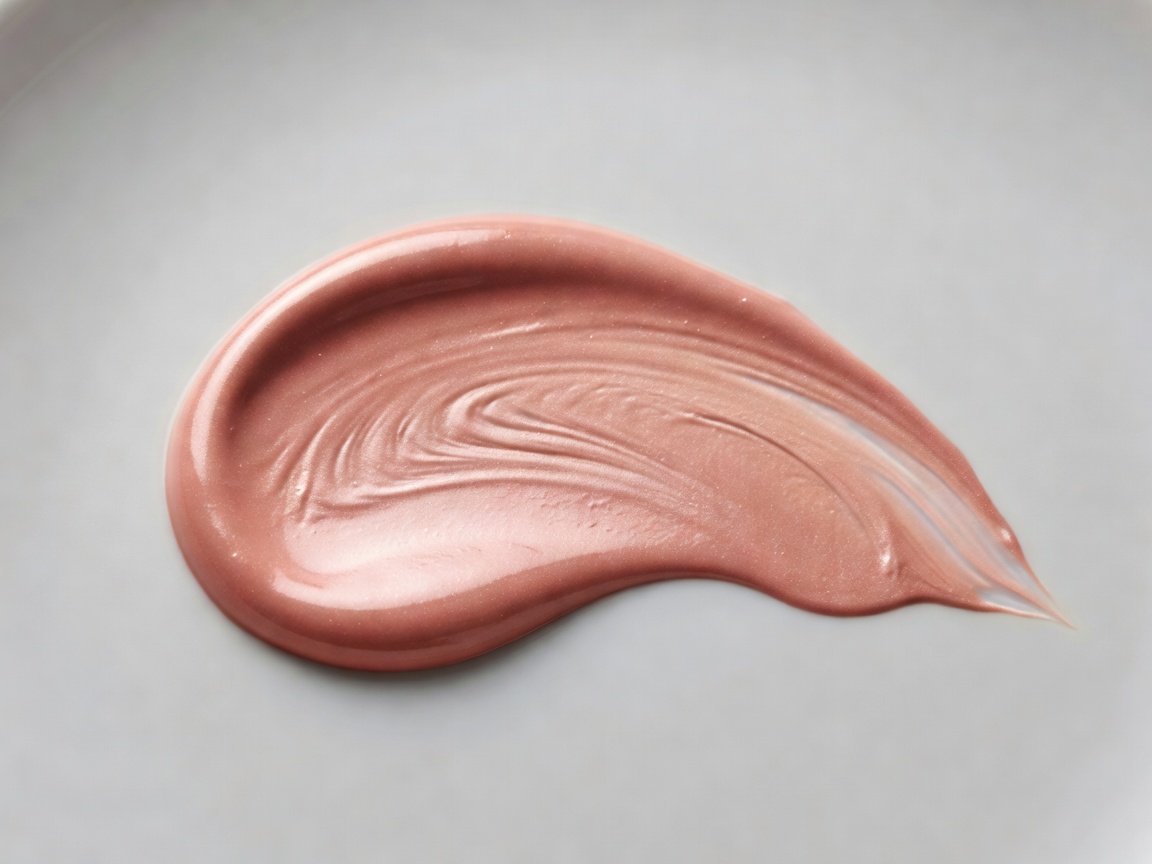
Close-up of a cream blush swatch with a soft, glossy texture spread across a neutral surface

Mixing finishes on purpose

Most polished looks combine finishes: a satin base, a matte bronzer to shape, a cream blush for life, a touch of highlighter on the cheekbone. The guiding idea is contrast. Matte areas make reflective areas look brighter, and vice versa. If everything glows, nothing stands out; if everything is matte, the face can look flat on camera.

A practical rule many makeup artists teach is to layer creams before powders. Powder over cream sets it; cream over powder can drag or patch. This is a general technique principle rather than a guarantee, since formulas vary widely.

We don't publish wear-time numbers or lab-style test results. Claims like "24-hour" come from manufacturers and depend on their own test conditions; your skin, climate and routine will differ.

Next on the trail: see how finishes become trends, or jump to how tools change each finish.