Detail 03 · Trend Lens

Translate a Look Into Your Routine

Trends are invitations, not instructions. Break any look into finish, placement and mood, and you'll know exactly which part to borrow.

Trends have always cycled

Beauty trends are older than social media. Clara Bow's rounded "bee-stung" lip defined the 1920s; Twiggy's graphic lower lashes became shorthand for the 1960s; the 1990s brought brown-toned lip liner and matte, minimal skin. Makeup artists such as Kevyn Aucoin, whose book Making Faces (1997) still circulates among beginners, taught a generation to see faces as structure and light rather than as a list of products.

What has changed is speed. A look can now travel from a runway, a K-beauty creator or a red carpet such as the Met Gala to millions of feeds in days. Speed makes it harder to tell whether a trend suits you, and easier to buy something before you understand it. Slowing down is the most useful skill on this page.
The three-part decoder

Finish

Is the look mostly matte, luminous, glossy or metallic? This tells you which textures to reach for, and often you already own them.

Placement

Where does colour sit? High on the cheek, swept to the temple, smudged under the lash line? Placement changes a look more than shade.

Mood

Fresh, polished, playful, dramatic? Mood guides intensity: how much product, how sharp the edges, how many features are emphasised.

Four looks, decoded

Glass skin

Popularised through Korean beauty culture, "glass skin" describes a very smooth, reflective complexion. Visually, it's a luminous finish placed across the high planes of the face with minimal powder. Much of the original idea concerns skincare, and we won't make claims about skin outcomes. As a makeup choice, you can borrow the effect with a sheer, dewy base and a cream highlighter pressed on top of cheekbones, keeping matte products to the centre of the face if you prefer less shine.

Blush draping

A revival of 1970s and 1980s editorial makeup, draping sweeps blush from the cheek up towards the temple and sometimes around the eye. The decoder: placement first, finish second. A cream or satin blush blends more softly over a large area; a highly pigmented matte powder needs a light hand and a fluffy brush.

Latte makeup

Warm browns, bronze and caramel tones across eyes, cheeks and lips, usually with a satin or softly luminous finish. Mood: cosy, monochrome. Adapt it by choosing one warm neutral and repeating it in different textures rather than buying a full matching set.

Graphic liner

Negative-space wings, floating crease lines and colour blocks. Here the tool matters most: a fine, firm brush or felt-tip liner and a steady elbow on the table. Start with a single line you can repeat confidently before trying shapes.

Camera versus mirror

Many trends are designed for the lens. Front-facing cameras flatten dimension, ring lights erase shadows, and filters can smooth texture or shift colour. A blush that looks subtle on a screen may read stronger in person, and a highlight that looks glassy in a video may look shiny in daylight.

A simple check: after applying, step back to arm's length near a window, then look again under the light where you'll actually spend your day. Adjust intensity there, not in the camera preview.

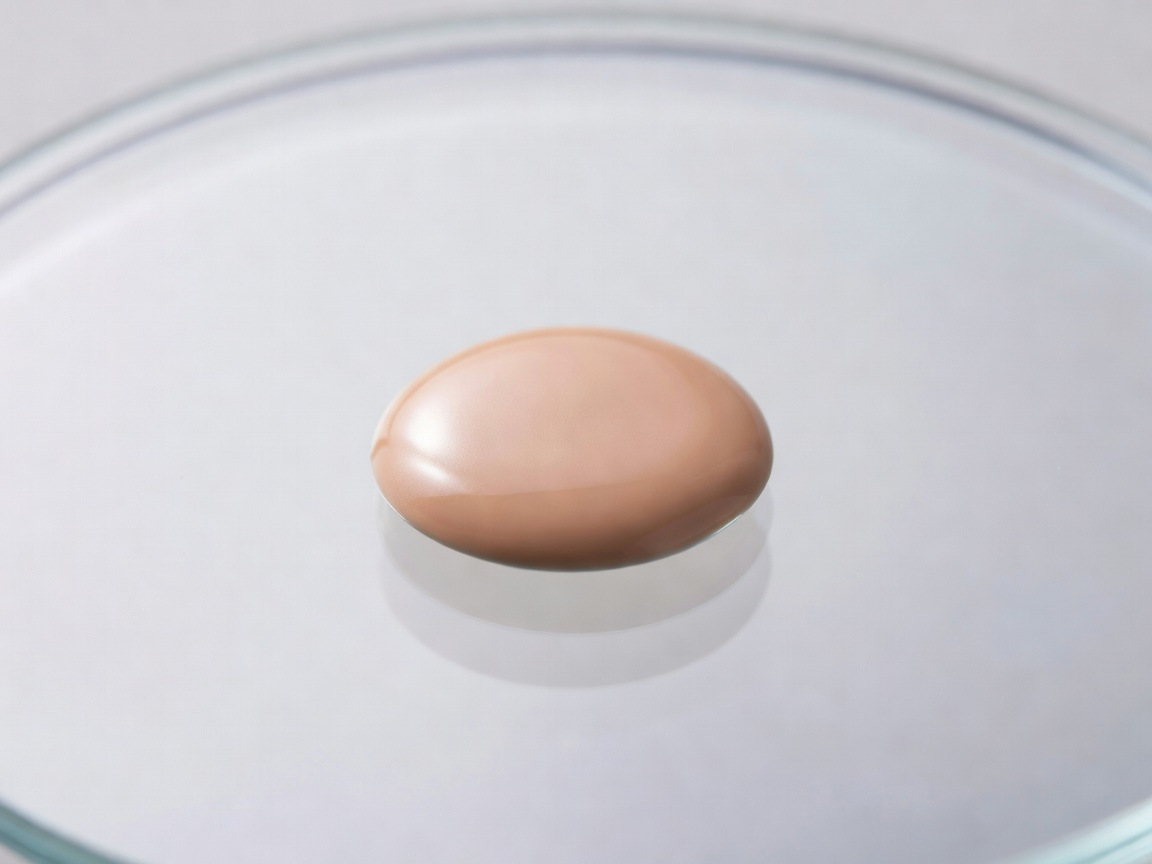
Close-up of a single drop of liquid foundation on a glass surface showing its smooth, slightly glossy texture

Questions before you buy

  1. Which part of this look do I actually like: the finish, the placement or the mood?
  2. Can I recreate that part with something I already own?
  3. Will this suit my real lighting, not just the camera?
  4. Is the product category one I'll still use when the trend fades?
  5. Do the claims on the packaging describe cosmetic effects, or do they promise something a cosmetic legally can't?

That last question matters. In the EU, UK and US, cosmetics are defined by their purpose: cleaning, perfuming, changing appearance and similar. Products that claim to treat or prevent disease fall under different rules. The US FDA explains this distinction publicly, and the Modernization of Cosmetics Regulation Act of 2022 (MoCRA) expanded its oversight of cosmetics. If a trend product makes medical-sounding promises, that's a reason to look closer, not a reason to buy.

Trends are optional. A look that doesn't suit your routine isn't a failure; it's information.

Continue: let the tool explain the technique →